|
DO
1. Focus attention on the bride and
groom.
2. Introduce yourself to the wedding guests so they know who you are and
why you’re speaking.
3. Keep it personal - Write and speak from your heart.
4. Try to relax before you get up to speak. It's uncomfortable to see
and hear a nervous speaker. Everyone, including the speaker wants it to
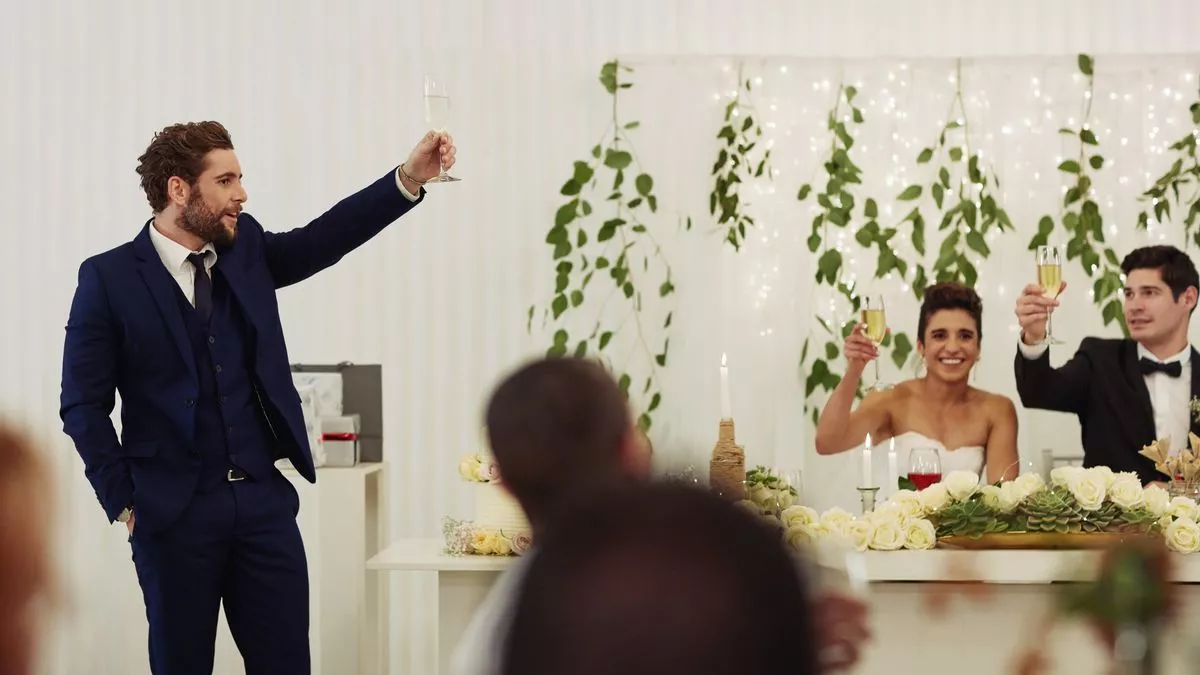
end. If you look like you enjoy being the best man and giving the toast,
then everyone else will be at ease and enjoy listening.
5. Remember to thank the last speaker and accept their tribute on behalf
of the person they were speaking about.
6. Keep it short, 3 or 4 minutes is okay.
7. Try to keep your speech upbeat without mourning the deceased. A
wedding is a happy occasion. If you must mention them, try to do so in a
positive light.
8. Look at your audience while you’re making your speech. And be sure to
look at the bride and groom — especially when you propose the toast.
9. Rehearse your speech. Practice it over and over. Rewrite any long
sentences and make sure the speech flows smoothly.
10. Get together with anyone else who is making a speech at the wedding
so you have an idea of what you'll each be saying. You don't want to be
repeating a similar story or joke that someone else has prepared. Also,
make sure you are familiar with the order that the speeches will be
given in, so you are prepared when your turn comes.
11. Ask For Feedback - Allow a friend to hear your speech and ask for
constructive feedback. Re-write your speech and recite it aloud again
until your friend thinks you got it right.
DON'T
1. Drink so much that you can't keep your composure, too much alcohol
could make you look like a fool.
2. Read your speech word for word from index cards. Use cards to
highlight a few key points that you want to cover so you can speak
naturally. For example, "I remember when John, Stacy and I went on that
trip to Italy and..." then you just put the word Italy on the card.
3. Criticize anyone during your speech including most importantly the
bride and groom but also including the vendors and guests. The audience
will tune you out. Also, don’t mention arguments you’ve had with the
newlyweds.
4.
Rush your speech. Take your time and speak slowly and clearly. If
you have a joke or funny story, wait a few seconds after you tell it for
people to laugh. If you are not the comedian type, don’t force the
jokes. It will make you look square.
5.
Start your speech by apologizing for how bad of a speaker you are
or by telling that you are nervous.
6. Ramble On - Assume your audience has a short attention span and
will tune you out if you don't make your point right away. Stick with
things that are relevant about the bride or groom.
7. Talk just for the sake of talking; don't upstage the bride and
groom
8. Be crude or bring up embarrassing situations.
9. Mention the bride and groom’s ex-girlfriend’s or boyfriends. I
know it sounds obvious but it happens.
10. Tell Bad Jokes - We expect toasts to have a joke or two, but
everyone has different tastes. Try not to say anything that would offend
the couple or guests. If a joke bombs, it makes you look bad. Test your
“appropriate” joke beforehand with a few people. If you get laughs, you
can use it. If not, DON’T!
11. Forget to end your speech with a toast to the person(s) you just
paid tribute to.
Traditional Wedding Speech Order
(Also, keep in mind that traditions have changed much over the
years. Feel free to change the order as you see fit)
1 - The first is the father of the
bride. He ends with a toast to the bride and groom.
2 - The second is the groom.
3 - The third wedding speech is the best man speech. He replies on
behalf of the maids of honour/bridesmaids and ends with a toast to
the parents of the bridal couple.
4 - The fourth one is the maid of honour.
5 - The father of the groom now speaks
6 - Others such as the mother of the bride also can speak at
weddings. Of course bride and groom decide!
|